
Mass Vulture Poisoning Incident in Kruger National Park
Over 100 vultures have tragically lost their lives due to a mass poisoning event at Kruger National Park, marking one of the most significant instances of vulture poisoning in Southern Africa. This alarming situation was identified in the Mahlangeni Section of the park thanks to the Endangered Wildlife Trust’s (EWT) wildlife poisoning surveillance system, which raised concerns about unusual activities in a secluded area of the park.
Rapid Response to the Crisis
Within hours of the alert, a collaborative team from SANParks and EWT rushed to the scene, where they discovered the grim aftermath of a mass poisoning that had affected hundreds of vultures. The source of the poison was traced to an elephant carcass that had been deliberately contaminated with highly toxic agrochemical pesticides, likely used by poachers to facilitate the illegal trade in wildlife body parts. A total of 116 vultures were found dead on-site.
Emergency Rescue Efforts
The initial responders, comprising six SANParks rangers and two EWT officials, encountered two severely affected vultures approximately 500 meters from the poisoned elephant carcass. These birds were urgently treated with emergency first aid measures, including atropine, activated charcoal, and fluid therapy, as stated by SANParks and EWT on Thursday.
Heightened Support and Coordination
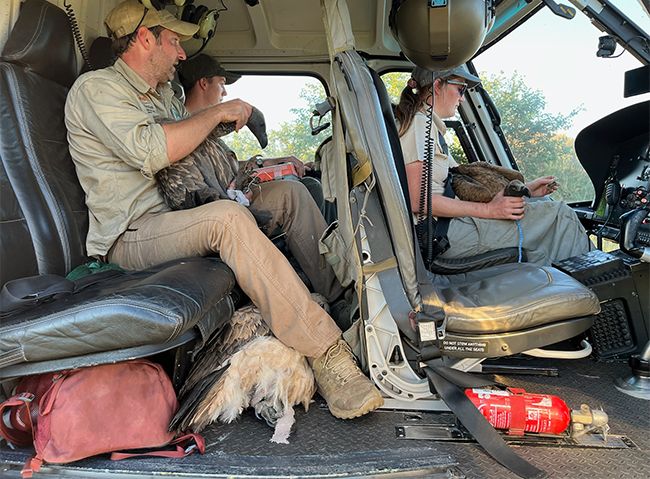
Additional support teams from the Moholoholo Wildlife Rehabilitation Centre, Briner Veterinary Services, and Wildscapes Veterinary Services were quickly mobilized. SANParks also activated a ranger and aerial support, utilizing helicopters for the first time in a wildlife poisoning rescue of this magnitude. This coordinated and intensive effort resulted in the successful rescue of 84 vultures, which included various species such as White-backed, Cape, and Hooded Vultures.
Transporting and Treating the Rescued Vultures
The rescued vultures were transported using a specialized vulture ambulance designed to stabilize poisoned birds during their journey to treatment facilities. In total, 45 vultures were taken by ambulance, while an additional 39 were airlifted to the SANParks K9 facility in Phalaborwa for immediate care. A final group of vultures was transported later that night to Moholoholo for further intensive treatment.
Ongoing Care and Recovery
Veterinary teams from WildScapes and Briner Veterinary Services, along with the Moholoholo team, worked tirelessly through the night to stabilize each bird and ensure their survival. Despite these dedicated efforts, five vultures did not survive the poisoning. As of Thursday morning, 83 vultures were reported to be alive and on the road to recovery.
Significance of the Incident
The magnitude of this incident is staggering, with 123 vultures found dead at the scene, including 102 White-backed Vultures, 20 Cape Vultures, and one Lappet-faced Vulture, all of which are categorized as endangered or critically endangered. Notably, 116 of these vultures were confirmed dead upon the team’s arrival.
Broader Implications and Conservation Efforts
This event represents one of the largest vulture poisoning incidents in Southern Africa, accompanied by the most extensive coordinated response seen to date. Over 20 individuals from conservation, veterinary, and law enforcement sectors contributed to the rescue and response efforts. This tragic occurrence underscores the escalating crisis of poison use in wildlife poaching throughout southern Africa. Poachers are increasingly utilizing agricultural toxins to target valuable species, including vultures and lions, whose body parts are sought after for traditional medicine.
Future Conservation Initiatives
According to SANParks, this incident poses a significant setback for the vulture population within the Greater Kruger Landscape, which has been attempting to recover from similar events in the past. SANParks is actively collaborating with various organizations and institutions to combat the rising trend of poisoning incidents. The success of this latest operation highlights the crucial role of partnerships in addressing such threats to wildlife. Without these collaborations, the recovery and treatment of the surviving vultures would not have been feasible.


